Are You Exercising Properly?
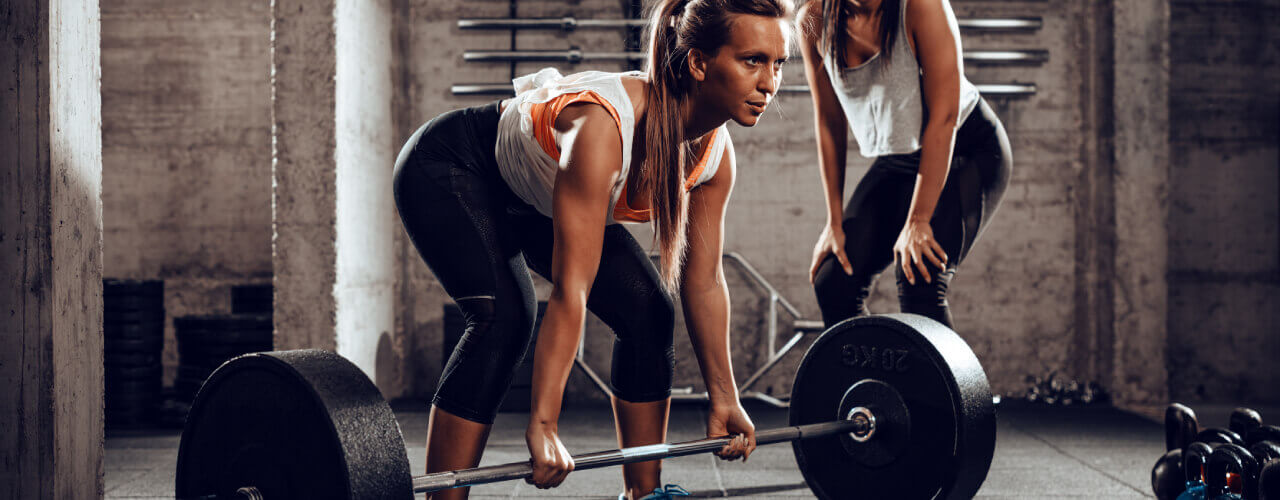
The debate over which is better will go on forever. Both cardio exercise and weightlifting hold equally important places when it comes to physical therapy and exercising for good health. The choice on which will serve the better purpose is made when the end goal is decided upon.
Cardio exercise is without a doubt the most effective way to increase stamina and endurance. Weightlifting would be the primary focus if the end goal is to develop mass or recover physical strength.
Even if your major concentration is on one sort of exercise, it is critical to include the other in your routine. A person who wants to improve their endurance should incorporate a few weightlifting workouts into their program.
The same is true for people who focus on weightlifting. You will only go so far without some degree of endurance. Create a healthy balance and remember to constantly change your routines so your body does not fall into a routine!
When you embark on any fitness journey, you need to set goals. Having goals in place will help you make appropriate choices as to what exercises and foods will best fit into your regimen and help you make your journey a successful one.
Keep things interesting when it comes to setting fitness objectives. To find out how well you are doing, try new workouts and push your limitations on occasion.
Once you've figured out which activities and food programs would work best for you, you might be shocked at how far you've come. Take the first step and set a few objectives. The only way to go forward once you've started down that road is forward. Get in touch with us right away to learn more!
We all know that cardio takes time. In fact, one of the most common complaints we hear from patients who come to us for physical therapy exercises is that there simply isn't enough time in their busy days to complete cardio workouts. Other times, whether there's a time constraint or not, many people report a lack of self-motivation simply because they can't stand the thought of doing cardio.
Fortunately, a physical therapist can assist you in incorporating cardio into your training program in ways that you may find enjoyable - or at the very least tolerable. If you despise cardio, don't despair: you're not alone, and there are a few tricks to finishing exercise in ways you may not have imagined.
There are many ways you can get the benefits of cardio, including:
One of the most important parts of using weights in your workout routine is making sure you have the proper form. The first step to doing a proper front squat is placing the barbell across the front of your shoulders, just below your neck. Make sure your fingertips are underneath the barbell, just outside your shoulder width.
Your elbows should form a sharp point. Keeping your chest up and your core tight, begin to lower yourself toward the floor using your hips and knees. Keep lowering yourself until your thighs are parallel to the ground, then hold the position for a few seconds. Slowly bring yourself back up to a standing position using your hips and knees once again.
Front and back squats can be done with or without weights added to the barbell. It is also possible to perform squats with hand weights or kettlebells if you desire to do so. If you decide to add more weight, make sure you are comfortable holding the additional weight on your shoulders before you do the squat.
If it feels too heavy on your shoulders beforehand, be sure to remove some, in order to avoid unnecessary injury. If you are just getting started, doing a squat without weight is a good way to become familiar with the movement and to prepare your muscles for the activity without adding too much intensity at once.
A back squat has the same fundamentals as a front squat. Both need the same motion: bending at the hips and knees until your thighs are parallel to the ground, then slowly recovering to a standing position. The most significant difference between a front squat and a back squat is how you hold the barbell.
A back squat needs holding the barbell OVER your shoulders, slightly behind your neck, as opposed to a front squat, which requires holding the barbell in front of your shoulders. Making ensuring the weight is not resting on your neck is one of the most important aspects of a back squat, as this can cause neck strain or damage.
Instead, make sure the barbell is being held on your shoulders and that you keep your chest up so your neck doesn't hunch forward during the squat. Attempting to lift too much weight and accidentally relying on your neck instead of your shoulders could lead to severe injury.
In short, yes!
A study conducted by three researchers at the University of Northern Colorado observed the differences when fit, college-aged males performed repetitions of squats at 60% of their maximum ability. The study participants randomly switched between running shoes and an unnamed brand of weightlifting shoes.
The researchers observed the range of motion (ROM), trunk displacement and ankle flexion.
The weightlifting shoes produced less trunk displacement than the running shoes. This means the athletes in the study exhibited less forward lean during the exercise. They were able to redirect the energy upward. The researchers surmised this was due to less stress on the lower back.
The weightlifting shoes produced a difference in peak ankle flexion. This was to be expected due to the lifted position of the heel in weightlifting shoes. The result was that it was easier for the study participants to maintain proper squat form during the exercise, with the thighs and hips closer to vertical and less forward lean. The knees more easily moved over the toes, reducing hip flexion, which also promoted better form and performance.
The participants in the study commented that they thought it was easier to perform squats in the weightlifting shoes than in the running shoes. This may have been due to the reduced stress on the lower back or through some other factors, such as the mental conditioning of being told you are using shoes specifically for weightlifting rather than for running.
Are you still deciding if cardio or weights are right for you? You don't have to make this decision on your own. Consult with one of our physical therapists today! We'll help you figure out the right workout plan for your needs.
Join Fusion Physical Therapy & Sports Performance in Cheshire and Southington, CT, for personalized training and rehabilitation.